Drawing a New Picture of Governance in the "Blue Land" -- Practice of Maritime Civilization in the New Era of Shandong Maritime Safety Administration
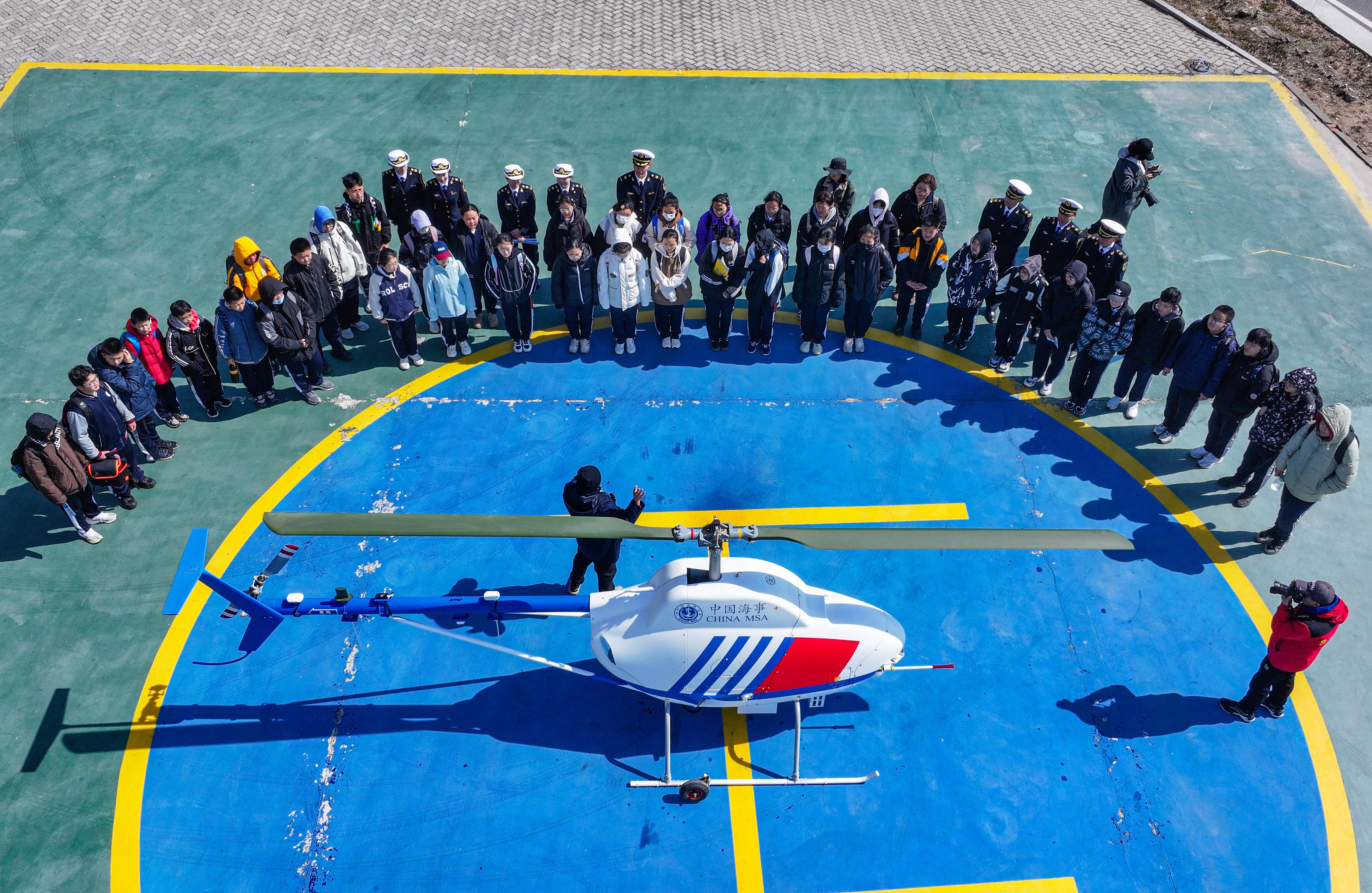
In July this year, at Dongying Port in Shandong, the largest maritime law enforcement vessel in the northern sea area, "Haixun 11," welcomed a special group of guests—more than 200 primary and secondary school students boarded the deck, and the "Floating Maritime Civilization Classroom" began as scheduled.
"What is the principle of ship side thrust?" "What rescue missions have you participated in?" The children eagerly asked questions, and the crew patiently answered them one by one. Amid laughter and joy, the seeds of safeguarding the "blue territory" were quietly sown in the children's hearts. This is a vivid example of the Shandong Maritime Safety Administration promoting maritime spiritual civilization construction and a daily reflection of its efforts to enhance public awareness of the "blue territory" and extend the practice of modern civilization to the sea.
"In recent years, we have closely focused on the overarching goal of 'uniting and guiding the masses, cultivating cultural values, and transforming customs,' deeply integrating maritime civilization practices into the construction of a modernized maritime administration. This has enabled the synchronized resonance and mutual empowerment of spiritual civilization construction and core work, providing strong ideological assurance and powerful spiritual motivation for building a modern maritime regulatory service system aligned with a strong transportation nation," said Ma Daojiu, Party Secretary and Director of the Shandong Maritime Safety Administration.
Bringing Education to the Sea, Directly Reaching the Frontline
For a long time, maritime workers have been dispersed, with long periods spent at sea, making traditional legal education difficult to reach the frontline. The Shandong Maritime Safety Administration broke the boundaries of the classroom, moving the "Maritime Lecture Hall" to the enforcement frontlines, ship decks, and fishing ports.
"There are no meeting rooms in nearby villages, and it's hard to gather people, so we take the initiative to go out to the beach and give lectures near the bow of the ships," said a staff member from the Qingdao Qianhai (Laoshan) Maritime Office. The office innovatively created the "Beach Classroom," regularly providing legal education and hands-on ship training to yacht owners in the jurisdiction. In 2024, this grassroots-friendly teaching model was included in Qingdao's community service projects.
In recent years, the Shandong Maritime Safety Administration has formed the "Haiqing Lecture Team," building a three-dimensional communication network combining "online + offline" and "shore-based + maritime" approaches to achieve comprehensive legal education coverage. Offline, the administration focuses on laws and regulations such as the "Maritime Traffic Safety Law of the People's Republic of China," regularly conducting special campaigns like "Constitution Publicity Week" and "Prevention of Collisions Between Commercial and Fishing Vessels," distributing over 20,000 legal education materials and answering questions for more than 50,000 people. Online, the administration has created a "Fingertip Classroom" through platforms like WeChat and mobile apps, delivering lightweight legal content to over 100,000 maritime workers, enabling them to learn anytime and anywhere.
While quietly promoting legal education, the Shandong Maritime Safety Administration has adhered to political guidance to establish a foundation for civilized practices. Relying on a three-tiered party-building responsibility list, the administration has implemented three major projects: "Leading Goose," "Fortress," and "Pioneer." It has promoted grassroots party-building projects led by secretaries, deepened the "Four Seas as One" coordination mechanism, and advanced the construction of the offshore wind power party-building alliance, linking regulatory and service chains through party-building efforts.
Ideological guidance fosters consensus, and institutional support promotes transformation. To continuously translate theoretical empowerment into practice, the Shandong Maritime Safety Administration has promoted the implementation of the "Shandong Province Maritime Search and Rescue Regulations," becoming the first in the country to issue the "Shandong Province Maritime Search and Rescue Center and Office Work Rules." It has also been deeply involved in revising the "Shandong Province Waterway Traffic Regulations" and guided coastal cities in enacting municipal maritime traffic safety regulations, forming a "one city, one regulation" local legislative framework. Through systematic and refined institutional support, the administration has effectively addressed regulatory challenges in the Bohai Bay area, offshore oil and gas, and new coastal industries, solidifying the concept of civilization into behavioral norms and transforming civilized practices into governance norms.
Ensuring Maritime Safety, Laying a Foundation of Security
Securing the safety baseline is essential for development confidence. In recent years, the Shandong Maritime Safety Administration has shifted safety governance toward prevention, ensuring high-quality development with high-level safety and laying a foundation of security for maritime civilization practices.
Faced with scattered and hidden maritime risks, the Shandong Maritime Safety Administration has established a comprehensive risk prevention and control system, creating a closed-loop management mechanism for "anomaly detection—information transfer—verification and handling—result feedback." It has handled over 10,000 maritime anomalies and deepened a three-year campaign to address root causes of safety production issues. During the 14th Five-Year Plan period, the administration ensured the efficient transportation of 7.089 million ships and 7.87 billion tons of cargo, serving 163 million passengers safely.
Maritime safety governance cannot rely on individual efforts; multi-party collaboration and coordinated governance are needed to weave a comprehensive protection network. The Shandong Maritime Safety Administration has focused on creating a multi-stakeholder governance framework, signing the "Bohai Rim Maritime Regulation and Service Guarantee Integrated Construction Collaborative Promotion Framework Agreement," and jointly building a maritime meteorological cooperation demonstration zone in the central and southern Yellow Sea with meteorological agencies and universities. It has led nine maritime-related departments in establishing the "Four Seas as One" coordination mechanism, promoted the transformation of safety management in shipping companies, explored the implementation of comprehensive credit management for waterway traffic safety, and established the Shandong Coastal Ship Safety Self-Discipline Alliance, creating a new maritime safety governance model that combines corporate self-discipline with administrative regulation.
Emergency rescue is the last line of defense for maritime safety. Centered around the "Haixun 11" vessel, the Shandong Maritime Safety Administration has formed a patrol coordination fleet of 477 transport ships and a rescue volunteer fleet of 1,641 high-powered fishing vessels, regularly conducting comprehensive emergency drills for commercial and fishing vessels, offshore wind power, and other scenarios. During the 14th Five-Year Plan period, the administration organized 422 search and rescue operations, successfully rescuing 2,259 people and 86 ships, efficiently handling major incidents such as the fire on the "Zhonghua Fuqiang" vessel and the oil spill from the "Symphony" vessel, demonstrating professional and efficient emergency response capabilities to safeguard the vast blue seas.
Serving the Sea, Delivering Maritime Warmth
The practice of maritime civilization in the new era goes beyond coastal education and improved systems; it is also rooted in frontline port and shipping operations, safeguarding industrial development, and providing practical support to warm the hearts of seafarers on long voyages.
"Adhering to the principle of 'people-centered development,' we focus on addressing the urgent and pressing concerns of the public, using high-quality services to promote the high-quality development of the marine economy. We aim to transform the achievements of civilization-building into tangible benefits for industries, businesses, and the public," said Ma Daojiu.
Focusing on the broader development agenda, the Shandong Maritime Safety Administration has implemented a five-year action plan for building a strong transportation nation, undertaking 18 national and provincial pilot projects. It has supported the activation of 44 berths for external use, ensured the construction of key projects such as the Dongjiakou Crude Oil Terminal and Yantai West Port Area, and pioneered special measures to support the shipbuilding and marine equipment industries and research institutions, ensuring the safe delivery of large offshore platforms and newly built ships.
To address the pain points and challenges faced by shipping companies, the Shandong Maritime Safety Administration has innovated route planning, creating the first-ever defined long-distance sea routes and establishing a "1 vertical, 2 horizontal, 64 branch lines" maritime network. It has piloted "one-box" and "one-bill" water-to-water transshipment systems, increasing the direct docking rate of large container ships by 16%. It has also innovatively implemented "non-stop" certification for inland waterway vessels, promoting the full resumption of navigation on the Xiaoqing River and connecting Shandong's "one vertical, three horizontal" inland waterway transportation system, continuously revitalizing the port and shipping economy.
In line with the trend of green and low-carbon shipping development, the Shandong Maritime Safety Administration has facilitated the commissioning of the nation's first hydrogen-powered tugboat and the trial operation of the intelligent ship "Zhifei." It has completed the first coastal hydrogen fuel and northern port B24 biofuel oil refueling operations. Additionally, to support the green and efficient development of new foreign trade industries, the administration has compiled the "Shandong Coastal Port Lithium Battery Energy Storage System Waterway Transportation Guide," serving the convenient export of the "new three items" (new energy vehicles, lithium batteries, and photovoltaic products).
With a focus on ocean-going workers, the Shandong Maritime Safety Administration has led the drafting of the "Guiding Opinions on Strengthening the Construction of a High-Quality Crew Team," established a crew industry party committee and service station, and released the "Crew Shore Leave Service Guide."
On June 25, 2025, the centralized signing ceremony for the Shandong Crew Remote Medical Consultation Service Agreement was held at the Qingdao International Seafarer Service Center, marking the official establishment of the remote medical consultation mechanism for Shandong crew members.
"Spending long periods at sea, it’s hard to get timely medical attention for sudden illnesses. Now, we can consult professional doctors online, making us feel much more at ease while at sea," said a seafarer who has been working on ocean routes for years, expressing heartfelt gratitude for this thoughtful support.
Forging a Maritime Spirit, Gathering Momentum for Progress
In recent years, the Shandong Maritime Safety Administration has explored a path of empowering maritime governance modernization through the soft power of industry culture, gathering momentum for maritime progress.
Looking inward, they have strengthened their team through civilization-building. The Shandong Maritime Safety Administration has promoted the integrated construction of civilized units, service windows, and teams, earning five national-level and five provincial-level civilized unit awards and establishing four national youth civilization units.
Civilization-building is not just about accumulating honors but also a crucial means of fostering unity and spirit within the team. For seven consecutive years, the Shandong Maritime Safety Administration has conducted the "Our Role Models" selection, with over 620 groups and individuals receiving provincial and ministerial honors, maintaining a public satisfaction rate of over 98%. "The measure of our work is not the thickness of our records or the number of awards, but whether our seafarer brothers can dock safely and whether passengers smile while crossing the sea," said Ma Zhenxing, a nationally recognized outstanding Communist Youth League member from the Weihai Maritime Safety Administration. His simple words reflect the commitment of Shandong maritime workers to "write civilization into the blue sea" through their actions.
Looking outward, they have amplified the industry's influence through a cultural matrix. In recent years, the Shandong Maritime Safety Administration has built a cultural brand system led by "Heart Sailing with the Boat," integrating resources such as patrol vessels and maritime museums to create multi-point interactive platforms like the Weifang Maritime Civilization Practice Base and the Chengshantou Maritime Exhibition Hall. The Chengshantou Maritime Exhibition Hall was selected as one of the country's first water safety education bases, and the "Floating Maritime Civilization Classroom" extends the dissemination of civilization from fixed venues to mobile vessels, transforming "people coming to us" into "us going to the people," allowing maritime culture and safety awareness to travel with the ships and reach the shore.
Rooting deeper, they have fostered social consensus through volunteer services. The vitality of civilized practices lies in public participation and recognition. The Shandong Maritime Safety Administration has strengthened distinctive brands such as the Weihai "Little Conch" and the Yantai Maritime Volunteer Service Corps. The Yantai Maritime Volunteer Service Corps was awarded the China Youth Volunteer Outstanding Organization Award. Additionally, the Shandong Maritime Safety Administration has conducted water safety knowledge campaigns in schools and communities for ten consecutive years and has regularly organized sea-cleaning and sea-protection activities, sowing the seeds of love and protection for the sea in the hearts of coastal residents.
From the children's questions on the deck of the "Haixun 11" vessel to the focused expressions of fishermen listening in the "Beach Classroom"; from the relaxed faces of ocean-going seafarers during video consultations to the heartfelt praise of businesses during the efficient customs clearance of "new three items" cargo—these seemingly small moments collectively paint the most authentic and moving picture of Shandong Maritime Safety Administration's new era maritime civilization practices.
-
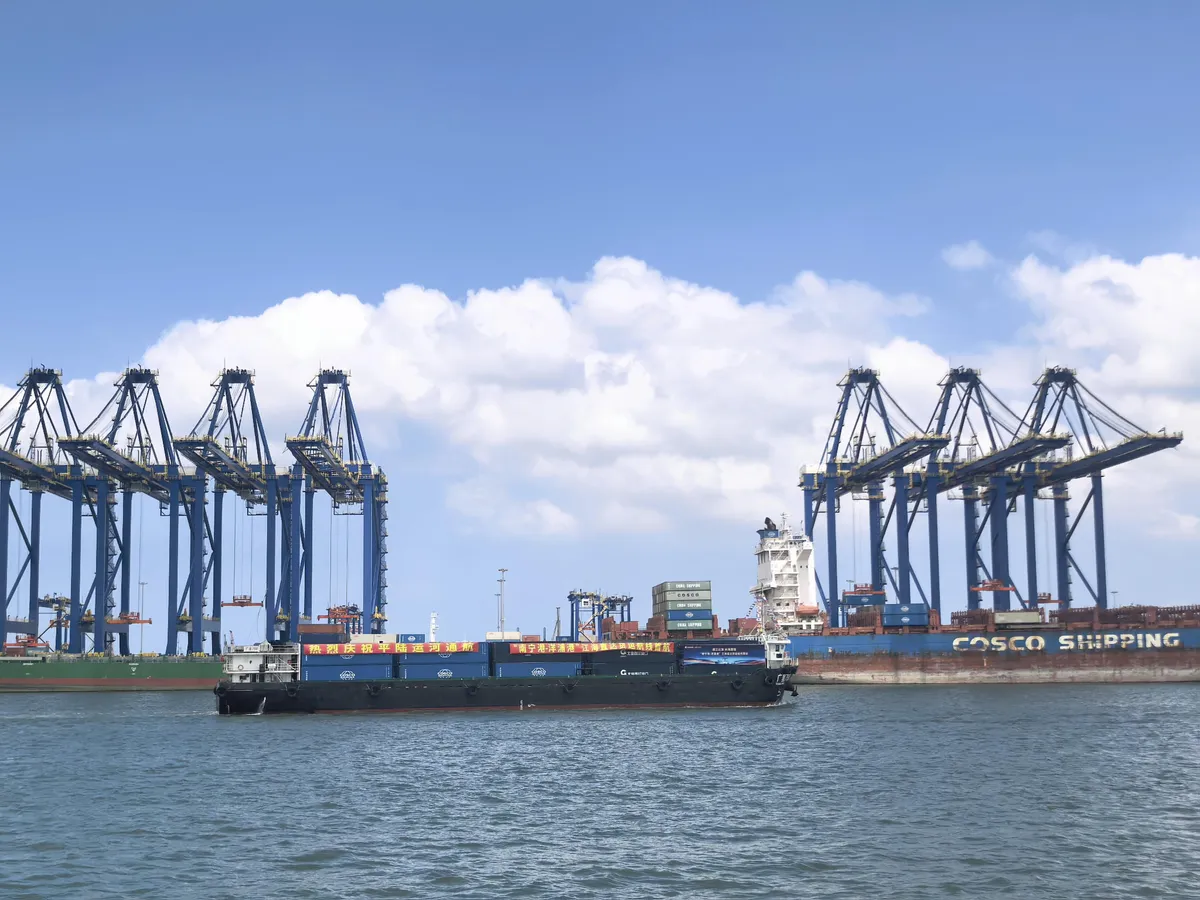
Yangpu Maritime escorts the safe docking of the inaugural vessel on the "Nanning-Yangpu, Hainan" direct inland-sea shipping route.4747
-
The Youthful "Voices" Riding the Waves: A Tribute to the Beihai Maritime Safety Center's Integrated Media Studio3145
-
Chongming Maritime Launches Special Escort Operation for the 2026 East China Sea "Fishing Opening"3844
-
Zhangzhou united multiple departments to carry out a water and land traffic safety campaign in schools.4119
-
The Nanjing Riverside Cruise welcomes its 3,000th voyage.5019