An integrated buoy light's new type of main-auxiliary light base debuts in Nanjing.
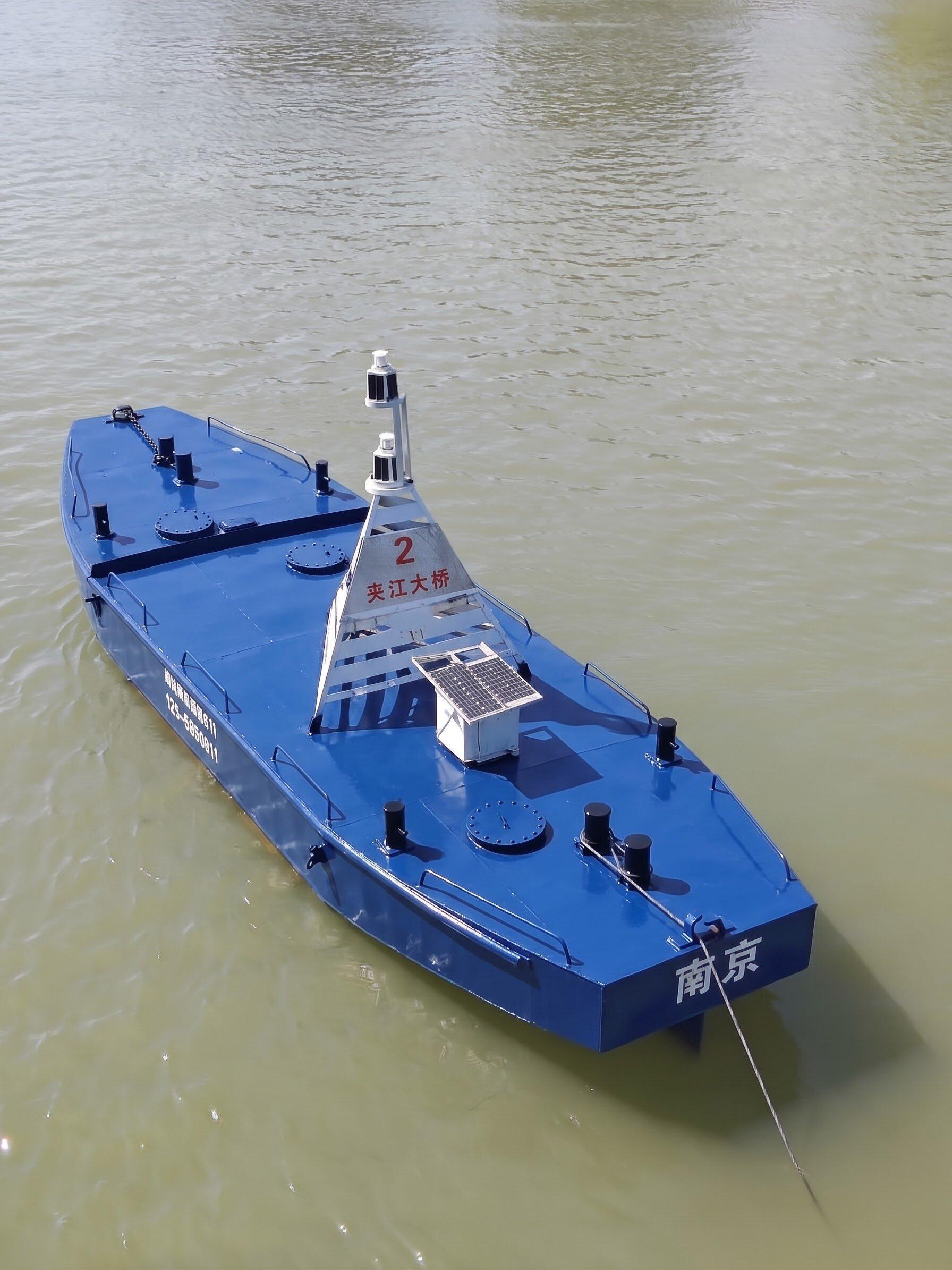
Recently, the Yangtze River's first integrated beacon light new main and backup lamp base debuted in Nanjing. This new base is designed to address the practical conditions of the Nanjing jurisdiction, such as wide river surfaces, abundant moisture, and frequent occurrences of plum rain, continuous overcast rain, and dense fog. It is expected to alleviate issues such as insufficient sunlight, delayed charging, overuse of stored energy, and nighttime light failures caused by the single photovoltaic energy storage mode of the integrated beacon light, thereby improving the operational stability of beacon lights under complex meteorological and hydrological conditions.
Under the high standards of normalized, all-weather, high-reliability operation required by intelligent waterways, the complex and variable meteorological and hydrological environments of the Yangtze River impose stringent tests on the stability of intelligent beacon equipment. An abnormal beacon light voltage can cause disruptions in the perception of data from the front end of the navigation channel, lead to inaccurate state monitoring, affect the integrity of the digital navigation platform data, weaken ship-to-shore coordination under complex weather conditions, and limit the all-weather operational capability of intelligent waterways.
To address the operational shortcomings of intelligent waterway terminal equipment and eliminate barriers to the "last kilometer" of smart navigation assistance, the Yangtze River Nanjing Waterway Bureau has adhered to requirements for iterative upgrades of intelligent equipment, based on the operational realities of intelligent waterways in the jurisdiction, and benchmarked advanced experience in redundant design for maritime intelligent beacons. By conducting multi-scenario field surveys, comparative data testing, and structural simulation optimization, the bureau successfully completed the innovative transformation of the new main and backup lamp base for the integrated beacon light. This minor hardware upgrade achieved significant improvements in the reliability, continuity, and intelligence of terminal equipment for intelligent waterways. The device has been successfully installed and is being trialed on the junction marker No. 2 White Buoy, and the next steps will involve collecting testing data and further optimizing the device's structure.
The newly upgraded main and backup lamp base adopts a dual-layer integrated structure. It is compact, highly compatible, and adaptable to mainstream integrated intelligent beacon lights available on the market. It accomplishes a single base, dual light groups, and dual redundancy hardware configuration. Through the digital navigation channel control system, the device can achieve intelligent switching between the main and backup lights, staggered energy consumption regulation, and balanced energy storage consumption. This thoroughly solves persistent problems such as insufficient photovoltaic energy storage during overcast and rainy weather, limited device endurance, and signal disruptions, ensuring the normal operation of beacon lights.
From the perspective of intelligent waterway construction, this transformation has achieved three core value upgrades: first, enhancing perception stability to eliminate issues like offline beacon telemetry or misreported statuses caused by equipment power outages, thereby ensuring the authenticity and continuity of front-end perception data for the digital navigation platform; second, strengthening capabilities to cope with complex conditions, effectively addressing bottlenecks in intelligent navigation assistance under adverse weather, and meeting the intelligent navigation demands for smart ships and ship-to-shore information exchanges; third, reducing intelligent maintenance costs, decreasing the frequency of nighttime inspections and emergency repairs, and transitioning waterway maintenance from "reactive responses" to proactive predictions and intelligent maintenance, aligning closely with the development trends of precision, automation, and long-term effectiveness in intelligent waterways.
Meanwhile, the Nanjing Waterway Bureau has been guided by the concept of "systematic intelligent upgrades" to continuously innovate the supporting systems for integrated intelligent beacon terminals. It has successively developed and improved accessory components such as efficient external photovoltaic charging units and magnetic suction intelligent adaptive bases. By optimizing photovoltaic charging efficiency, simplifying the deployment and dismantling process of intelligent equipment, and enhancing the stability of equipment against wind and waves, it has constructed a beacon terminal intelligent maintenance system featuring intelligent power supply, stable deployment, redundancy assurance, and long-term operation. This maximizes the perception and operational potential of hardware equipment in intelligent waterways, promoting standardized, intelligent, and integrated quality upgrades of navigation facilities in the jurisdiction.
Next, the Yangtze River Nanjing Waterway Bureau will continue to aim for the overall goal of intelligent waterway construction, focusing on the core tracks of intelligent perception, intelligent maintenance, and intelligent security for navigation channels. It will deepen front-line micro technical modifications and practical innovations, consolidating the foundation of the digital waterway perception network through terminal equipment intelligent upgrades, and continually enhancing intelligent navigation capabilities in complex waters and adverse weather conditions to provide solid technical support for the high-quality development of the Yangtze River navigation channels.
-
An integrated buoy light's new type of main-auxiliary light base debuts in Nanjing.4539
-
Digital Intelligence Integration Empowering Collaboration for a New Voyage—China Classification Society Holds Shanghai Regional Committee's 2026 Annual Meeting3318
-
Shanghai Waterborne "One-Stop" Dispute Resolution Center (Yangpu Sub-Center) successfully mediates a ship reimbursement dispute worth 160,000 yuan.4075
-
Examining the Controversy Surrounding Qian Kai Port: Safeguarding Investment Boundaries for Chinese Enterprises in Overseas Rule of Law3313
-
The Ministry of Transport and two other departments issued an action plan to promote the application of new energy vessels in inland waterways, advancing their adoption across various scenarios.3852