Crossing Mountains and Seas, Together Embarking on a Green Voyage — An Account of the International Training Program on Green and Low-Carbon Ship Technology Under the Belt and Road Initiative
In October, in Wuhan, the fragrance of osmanthus permeates the entire city. In a classroom, more than 20 technical personnel sit together, with a digital twin model of a new energy power system and green new energy application cases for ships displayed in front of them. They come from 11 countries involved in the Belt and Road Initiative, including Indonesia, Malaysia, Vietnam, Egypt, Thailand, and Brunei—there are flag state inspectors from maritime management agencies, technical experts from ship inspection departments, as well as business leaders from shipbuilding and shipping companies. One of the topics they are most concerned about is—how can ships operate more cleanly?
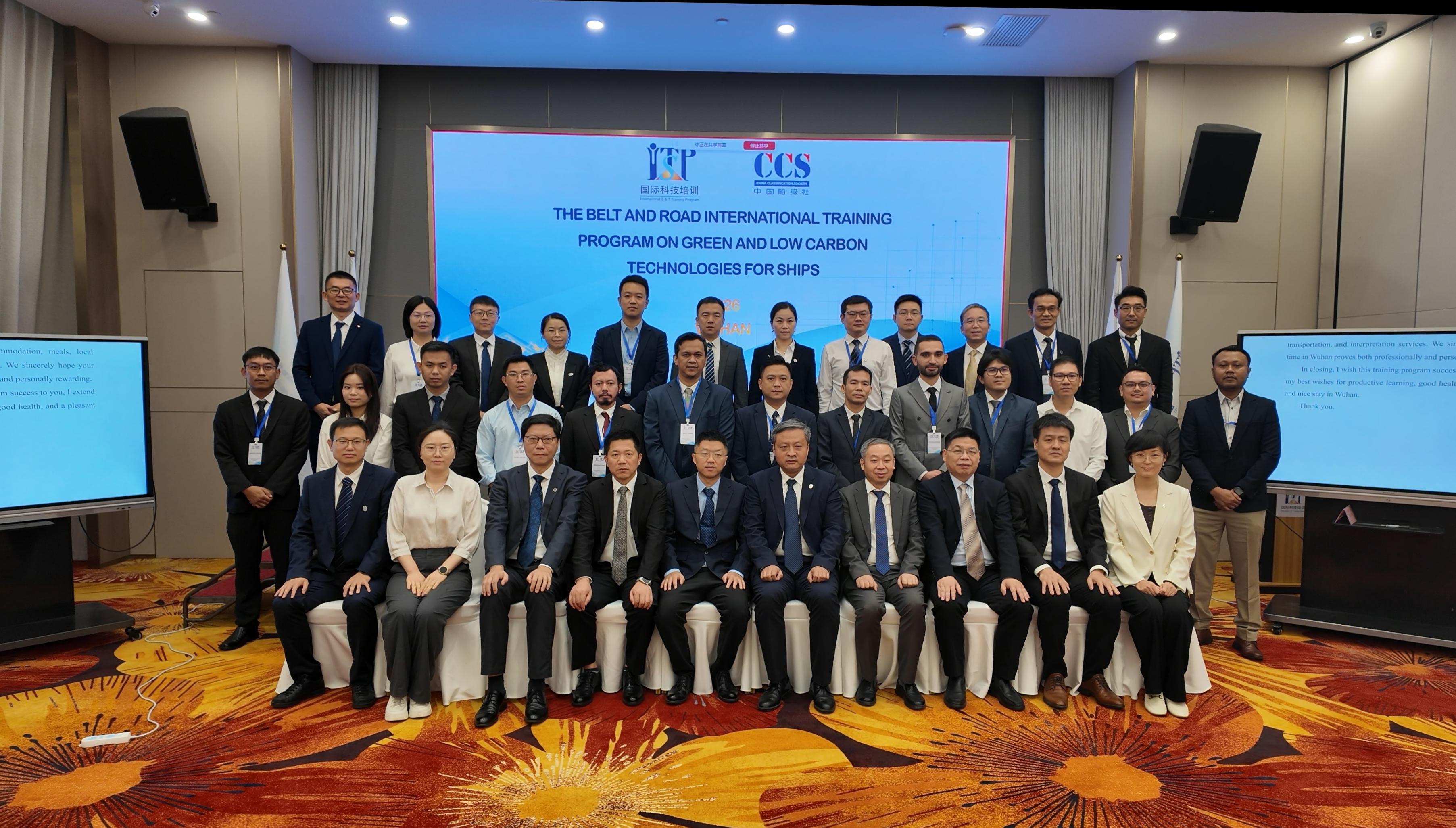
This was a scene from the International Training Course on Green and Low-Carbon Ship Technologies hosted by the China Classification Society (CCS) under the Belt and Road Initiative. As the global shipping industry collectively pivots toward the overarching goal of net-zero greenhouse gas emissions, China's green standards and practices for ship classification are extending from the Yangtze River to faraway shores. In the classroom, the latest practices and technical standards of China's green and low-carbon ship technologies were gradually unfolded. Outside the classroom, an international collaboration anchored in "green" is taking root and flourishing in the field of ship classification.
Low-carbon technology courses for 11 countries
"We are willing to strengthen policy coordination, experience exchange, and project cooperation with industry partners from various countries, share the results of green development, and put the concept of a community with a shared future for mankind into practice. We believe that with joint efforts, the green and low-carbon transformation of ships will surely push global shipping toward a higher level of green development and inject new vitality into maritime cooperation under the Belt and Road Initiative," said Zhang Qingwen, Vice President of CCS, at the opening ceremony.
This training is one of the projects under the Ministry of Science and Technology of China's 2025 Development Country Technology Training Program. It aims to help developing countries grasp sustainable development concepts, knowledge, and skills, enhance sustainable development capabilities, and better respond to future transformations in green and intelligent industries.
The course content is closely focused on the theme of "green": it systematically introduces China's green and low-carbon ship technology systems as well as CCS's theoretical explorations and practical experiences in ship inspection and technical standards. It showcases China's innovative achievements in promoting green ship design, developing and testing new energy power systems, and constructing green, intelligent ships. Teaching methods are diverse, including expert lectures, industry discussions, and on-site research, ensuring that theoretical knowledge is implemented in workshops, shipyards, and laboratories.
Why was "green and low-carbon" chosen as the theme? The answer lies in the global trends of the shipping industry. According to the International Maritime Organization's greenhouse gas reduction strategy adopted in 2023, international shipping aims to achieve net-zero greenhouse gas emissions around 2050. By 2030, annual greenhouse gas emissions from international shipping must be reduced by at least 20% compared to 2008 levels, striving for a 30% reduction. New fuels, new propulsion systems, and new ship designs have become the "future exam questions" that nations are vying to answer. Whoever masters these answers first will gain an edge in standard-setting and market leadership.
For this reason, the value of this training goes beyond temporary gains. Its aim is to clearly explain and disseminate China's technical achievements in areas such as green ship designs, alternative fuels, and energy-saving emission reductions, thereby promoting interoperability of related standards in ship green low-carbon technologies and international ship classification among various countries. For the representatives of the 11 participating countries, this is a technical "pilgrimage"; for CCS, it represents a journey to expand its influence in global standards.
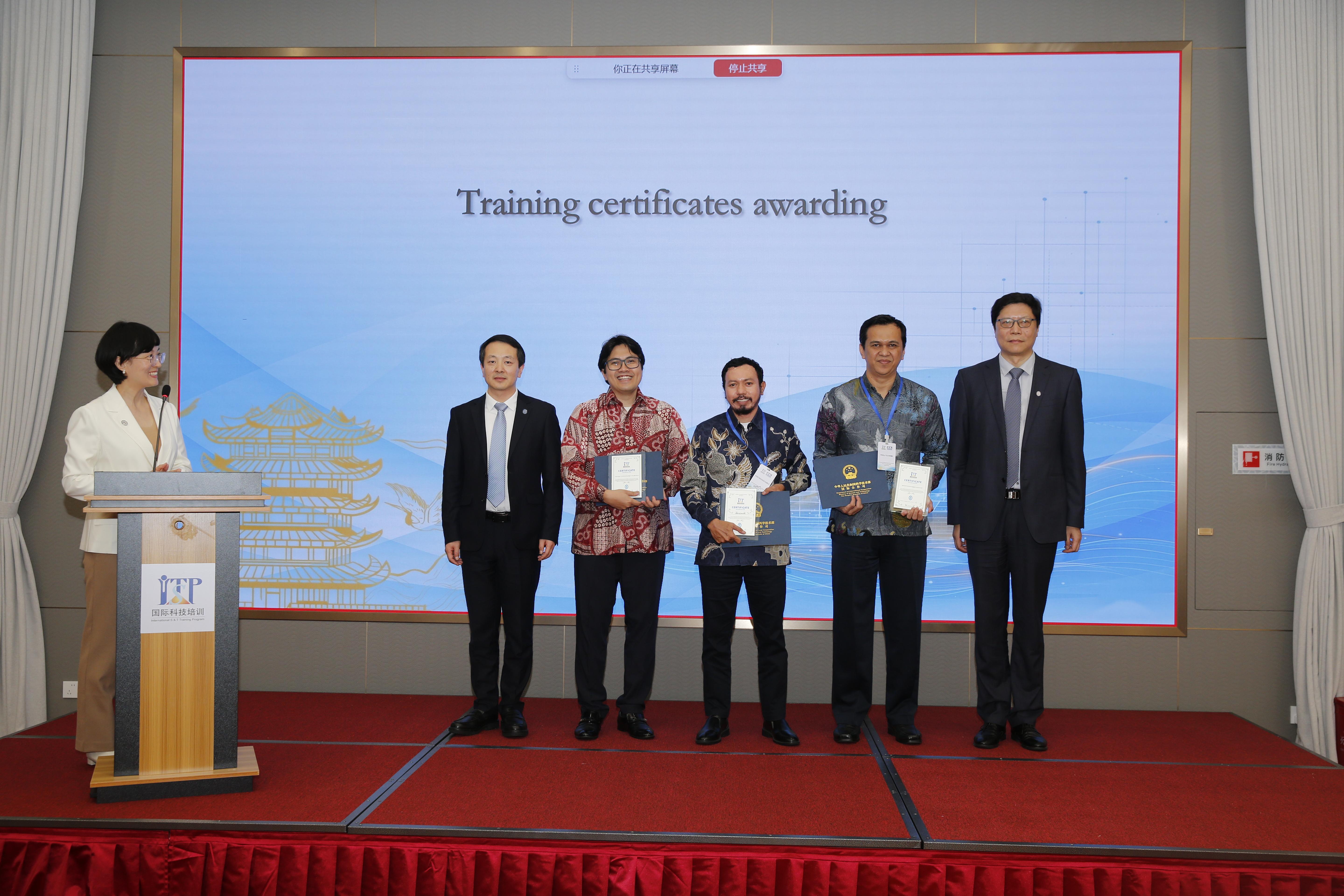
In fact, this is not CCS's first "open class." As early as 2019 and 2024, CCS successfully hosted two international training programs on ship inspection technology management. These programs introduced CCS's ship classification technology, systems, and the development trends in China's shipping industry to trainees from countries including Tanzania, Saudi Arabia, Thailand, Vietnam, Malaysia, Indonesia, and Nigeria. The training was warmly received, fostering the global outreach of China's technologies, standards, and solutions.
Similar training programs are forming a system, becoming a tradition. As part of the third batch of pilot units for building a strong transportation country, CCS is implementing specific tasks to enhance "international cooperation and exchange capabilities in ship inspection" through such projects.
Through this training, CCS's consistent open attitude can be clearly seen: promoting the coordinated development of the green and low-carbon shipping industry, shipbuilding industry, and related supporting industries. It aims to enhance international cooperation between China and Belt and Road countries in the maritime, ship inspection, and shipping fields, as well as promote interoperability of standards related to green low-carbon ship technologies and international ship inspection techniques. This represents an "amplification" of the international influence of China's green technologies and is a concrete contribution to the high-quality development of the Belt and Road Initiative in the transportation sector.
Joining hands with Indonesian shipping partners for green transformation
Outside the classroom, the steps toward collaboration have already begun.
Indonesia, known as the nation of a thousand islands, relies on shipping as the lifeblood of its economy. Its fleet primarily consists of general cargo ships, tankers, and container ships, with an urgent need for green transformation. Meanwhile, CCS has accumulated extensive expertise and standards in fields like alternative fuels and green technology applications for ships. The needs of both sides are highly aligned and complementary.
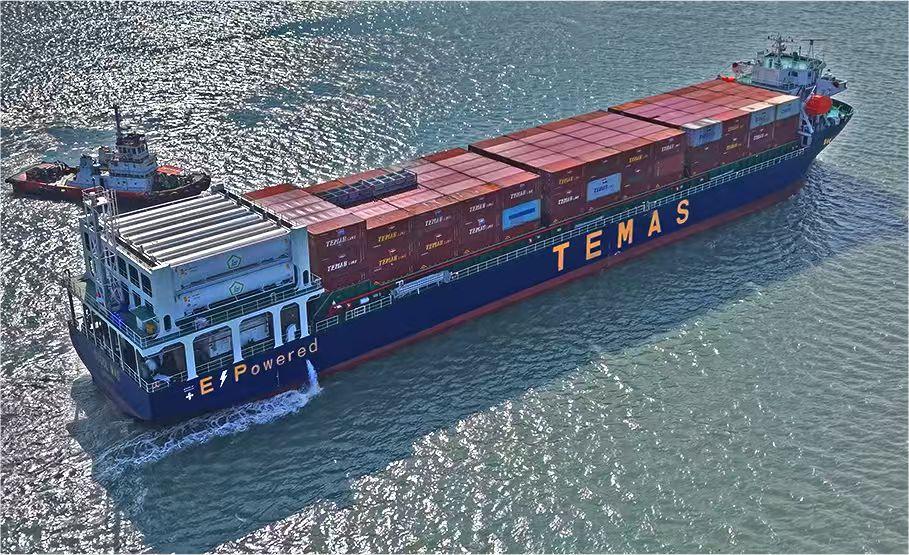
In June 2024, CCS's Singapore branch visited the well-known Indonesian shipping company WARUNA SHIPPING GROUP and conducted special technical training for the company. Since then, the two sides have continued to promote connectivity and have delved into the ship repair sector. In December of the same year, CCS's Wuhan Rules Research Institute provided risk assessment technical services for the Indonesian shipping company TEMAS Group's LNG (liquefied natural gas) powered container ship "DIGUL MAS," with a capacity of 488 TEU. This ship completed its maiden commercial voyage in August 2026 and became Indonesia's first LNG-fueled ship. It also marked the beginning of Indonesia's development of a green domestic fleet.
In 2025, CCS participated in the 34th Asian Shipowners' Association meeting and Indonesia Shipping Week event. With the witness of Arsenio Dominguez, Secretary-General of the International Maritime Organization, CCS signed a Memorandum of Understanding with BKI (Indonesian Classification Society) to develop guidelines for the application of marine biofuels. Both sides have engaged in in-depth cooperation in areas such as research on alternative marine fuels, standard setting, and practical promotion, thus promoting the widespread application of marine biofuels in the Southeast Asian shipping market.
In fact, CCS and BKI signed their first cooperation agreement as early as 1991, and this October marked the renewal of this agreement. The bilateral cooperation agreement covers various fields of business and technical collaboration. Additionally, they have established a mechanism for high-level exchanges, providing better services and support to the maritime industries of Indonesia and the Asian region through close cooperation.
"I am very much looking forward to the collaboration between BKI and CCS extending from the signed cooperation agreement to deeper technical collaboration. Together, we can conduct joint research, promote technical pilot projects, and work on the development of practical standards. This will continuously enhance the certification service capabilities of both parties," said Aditya Trisandya Pramana, Vice President of the Statutory Department at BKI and a participant in the training. He hopes that future collaboration will focus on capacity building, the selection of pilot projects, and application of emerging marine technologies to achieve tangible results in the shipping industry's green transition.
Currently, China and Indonesia are jointly building a China-Indonesia community of shared destiny with regional and global influence. China's Belt and Road Initiative and Indonesia's "Global Maritime Fulcrum" strategy are deeply aligned, and cooperation between the two countries in emerging fields such as green shipping transformation has unfolded comprehensively. At present, there are 177 Indonesian-flagged vessels under CCS classification, totaling a gross tonnage of 2.33 million tons, with an average ship age of 11.57 years.
The Indonesian shipping industry has clear expectations for the direction of cooperation.
"For us, CCS is not just a classification society but also a technical cooperation partner." Yusuf Munanji Sahlan, Manager of the Engineering Department at WARUNA Shipyard in Indonesia, and Senior Captain Welly Yandry expressed their desire to carry out practical cooperation in three key areas: First, advance research and harmonize regulations by jointly developing a hybrid propulsion design suitable for Indonesian waters, emphasizing battery-based propulsion with B50 biofuel (a ship-suitable alternative fuel blending 50% crude palm oil-based biodiesel and 50% traditional fossil diesel) as a backup fuel. They aim to conduct preemptive rule interpretation and Approval in Principle (AIP) to reduce major changes during the construction phase and improve design review efficiency. Second, they seek to jointly establish standards for retrofitting dual-fuel ships by compiling a guide tailored to transforming traditional vessels to "LNG + B50" dual-fuel ships. Considering the lack of LNG bunkering facilities in Indonesia, B50 biofuel could serve as a reliable backup power source to ensure continuous ship operations. Third, they want to strengthen capacity building and technical sharing by jointly conducting training on inspection processes, risk assessment, and operational application of green standards to enhance internal audit capabilities. Leveraging CCS's global experience, Indonesia could also improve its infrastructure and regulation systems for alternative fuels.
Anthony Arief Priadi, Senior Advisor of Technology and Transportation Energy at the Indonesian Ministry of Transportation, suggested that a regular technical cooperation mechanism encompassing multiple stakeholders could be established for the long term. These stakeholders would include Indonesian maritime authorities, CCS, Indonesian and Chinese shipyards, and related industry chain players. They would jointly coordinate regulatory training, mutual recognition of standards, collaborative research, and case assessments concerning classification matters, advancing technology sharing, fostering local industrial development, addressing deficits in Indonesia's marine engineering and ship inspection, and promoting decarbonization in shipping to enhance the competitiveness of both countries' maritime industries.
Deepening methanol fuel efforts with Malaysia’s MTT
Founded in 2010, MTT Shipping Sdn Bhd (MTT) is a leading Malaysian container liner operator, commanding about 46% of the domestic container shipping market in Malaysia.
The Kuala Lumpur office of CCS, which serves as CCS's localized service hub in Malaysia, has been continuously providing inspection coordination and technical consulting services to MTT. Roughly 30% of MTT’s fleet is classified with CCS. In recent years, the focus of their partnership has gradually shifted towards new ship inspection and the application of green technologies. Their relationship has evolved from basic classification services into deeper project collaboration.
MTT is constructing two 12,500 DWT dual-purpose chemical and oil carriers at Kui Port Shipyard. CCS is responsible for design review and construction inspection of these ships. Equipped with dual-fuel engines that can run on diesel and methanol, and featuring low-nickel duplex stainless steel hulls, these cutting-edge green ships set a high standard for environmental and technical excellence. Surrounding this key green project, CCS provides MTT and its collaborators with tailored technical support.
In June 2025, the International Business Operations Office of the CCS headquarters organized an expert team to conduct a special technical exchange on methanol-fueled ships with MTT, German supervisory body NSB, and Kui Port Shipyard. Discussions focused on practical topics such as leak prevention, fire detection and extinguishing, and engine maintenance for methanol-fueled ships. Together, they built the technical confidence of ship owners and shipyards in constructing methanol-powered vessels.
The scope of cooperation continues to expand, extending from technical projects to the establishment of industry advisory mechanisms and high-level exchanges. In October 2025, MTT’s Operations Director, Lee Kwang San, was appointed as an honorary member of the CCS Singapore Advisory Committee. Through this regional maritime cooperation platform, MTT is able to stay aligned with CCS's latest technical regulations and standard updates. In July 2026, MTT Chairman Dato' Seri Wong Jian Li, Managing Director Huang Lianxing, and Operations Director Lee Kwang San visited the CCS International Business Operations Center to deepen high-level interactions and strategic communication between the two sides.
Two participants from MTT attended the training session, and they also shared their expectations for future collaboration between the two parties.
Jason Chong, the company’s Maritime Manager, explained that MTT plans to construct multiple new ships at Chinese shipyards in the future. On the one hand, they hope CCS can provide more support for MTT's new shipbuilding projects and green power retrofit projects. On the other hand, they also look forward to CCS offering special training to help the team stay up-to-date with the latest industry standards and regulatory requirements, as well as providing timely emergency response support services for MTT.
“CCS is currently the most suitable classification society for MTT. At present, MTT is committed to reducing greenhouse gas emissions and urgently requires relevant emission reduction technology support. We also hope that CCS can provide training on artificial intelligence technologies to help us improve our fleet and ship operational management efficiency,” said MTT's Technical Manager, Hairul Azri bin Abdullah.
Measuring sustainable development through standards
CCS has opened its doors to shipping partners in Indonesia and Malaysia, its confidence grounded in years of accumulated "resources." Although its journey toward green, low-carbon, and sustainable development started relatively late, CCS has carved out a trajectory of moving from "catch-up—keeping up—leading."
First, consider the standards—
In 2012, CCS released the world's first "Green Ship Guidelines." In 2017, it pioneered the "Guidelines for Alternative Fuel Applications on Ships." In 2020, it introduced an updated "Green Ecological Ship Guidelines,” embedding the concept of cyclical sustainability. To date, CCS has issued more than 90 sets of green eco-related guidelines, establishing technical standards for the application of clean energy sources such as LNG, batteries, methanol, hydrogen, ammonia, and biofuels, supporting over a hundred green eco additional service notations.
Next, consider the “first ships”—
On October 13th this year, the world’s first dedicated ammonia fueling vessel, "Sheng Hang Yongle," performed the world’s first green ammonia fuel bunkering for the Belgian 210,000-dwt bulk carrier "European Minerals" at Xiushan East Anchorage in Zhoushan. This vessel underwent a functional upgrade inspection for ammonia fuel bunkering services by CCS and was awarded the world’s first certificate of classification for ammonia fuel bunkering. This marked the first commercial use of green ammonia bunkering beyond Chinese ports and throughout the production, storage, transport, and application chain.
On September 1st, the world’s first 325,000-dwt methanol dual-fuel bulk carrier, "Yuanhai Silk Road," named by CCS and certified by its inspection and review process, was launched. The ship is equipped with a methanol dual-fuel propulsion system, allowing flexible switching between methanol and traditional fuel modes depending on oceanic navigation conditions. It meets the International Maritime Organization's EEDI Phase III (the third stage of mandatory efficiency standards for ship energy design), representing the highest current international efficiency standards.
Earlier, CCS completed the inspection and certification of China’s first domestically built 10,000-deadweight coastal pure electric high-end smart vessel, "Ningyuan Ekun." The ship provides a zero-carbon transportation solution for coastal shipping.
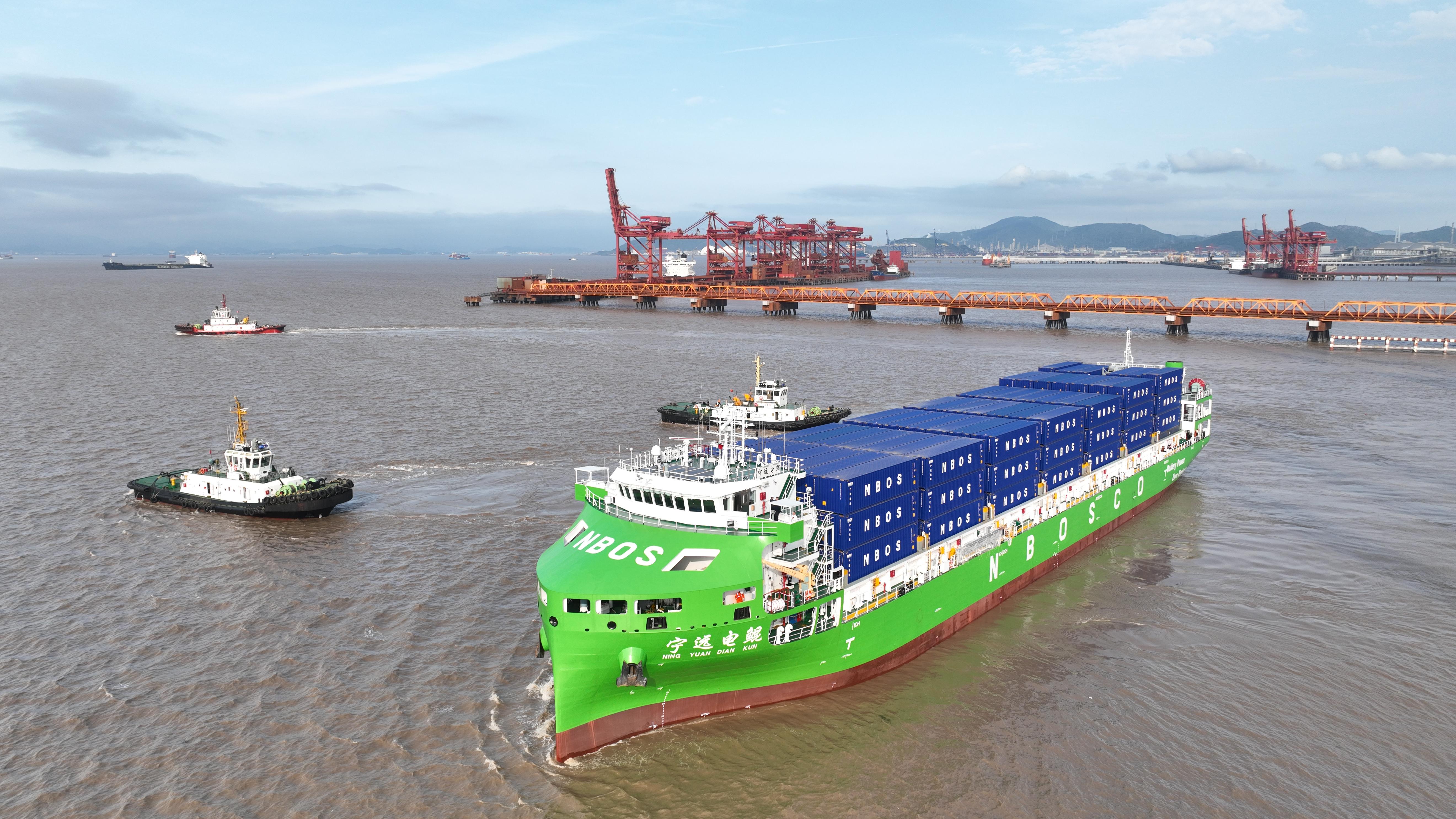
The continuous introduction of “first ships” is attributed to CCS’s early layout for next-generation alternative fuels and its implementation of work deployment under the Ministry of Transport. With a focus on the core requirement for "green transformation" during the 15th Five-Year Plan period, CCS has conducted pioneering research on cutting-edge technologies for green energy solutions such as methanol, ammonia, hydrogen, and battery power. It has continuously refined its comprehensive standardization framework that covers all fuel pathways, establishing safety benchmarks for industry innovation. Simultaneously, its advanced service system forms a complete loop—from scientific research breakthroughs to standard formulation to practical ship inspections—ensuring green technologies are not only created but are also applicable and safe for use.
Green is becoming the prominent color of China’s classification society’s international presence. Looking forward, CCS will continue to focus on new trends and technologies in shipping, providing high-standard norms and inspection services, and assisting the green and low-carbon transition of global shipping to navigate steadily into the future.
□ Editor’s Note
China Classification Society Solutions Help the Shipping Industry Navigate Toward a Net-Zero Future
Leaving the classroom of the training program, the lingering fragrance of osmanthus aromas remains in the air. The scene of shipping professionals from more than ten countries sitting together to discuss alternative fuels and low-carbon ship designs stays in my memory. This interview made me realize that shipping decarbonization has never been the solitary journey of a single country or single institution but a collective mission requiring united efforts.
Shipping is the lifeline of trade and island connectivity, but the path to green transformation is not easy. Financial constraints, regulatory gaps, a lack of technical expertise, and the lag of alternative fuel infrastructure are common challenges for many shipowners and maritime managers. Traveling thousands of miles to come to China, they seek not only to learn a set of standards or a single technology but also to find a decarbonization path tailored to their own shipping realities.
The Belt and Road International Training Program for Green and Low-Carbon Ship Technologies organized by CCS serves as a bridge for such technical exchange. Inside the classroom, it’s about sharing standards, designs, test data, and lessons learned. Outside the classroom, tangible cooperation is taking shape, as seen in Indonesia’s work with biofuels and Malaysia’s efforts with methanol dual-fuel ships. Participants are leaving not only with notes and materials but also with intentions for concrete project collaborations.
There is no universal standard answer to the question of shipping decarbonization. The structure of fleets, route conditions, and industrial foundations vary between developed and developing countries. Green transformation pathways and strategies should be diverse and inclusive. The practice of CCS demonstrates that the internationalization of China’s classification society does not merely export standards; instead, it uses technology as a bridge, respects the development realities of different countries, provides tailored inspection services, offers capacity-building, and engages in joint research and development.
Oceans connect the world; destiny is shared. Green collaboration in maritime development under the Belt and Road Initiative is hidden in every technical exchange and every jointly developed guideline. As green ship inspection standards flow along the shipping lanes, Chinese solutions continue to help the shipping industry steer toward a net-zero future.—Li Siyi
-
Crossing Mountains and Seas, Together Embarking on a Green Voyage — An Account of the International Training Program on Green and Low-Carbon Ship Technology Under the Belt and Road Initiative4171
-
Bohai Bay Guangli Port Area launched a volunteer service activity titled "Caring for Fishermen's Children."4828
-
An integrated buoy light's new type of main-auxiliary light base debuts in Nanjing.4612
-
Digital Intelligence Integration Empowering Collaboration for a New Voyage—China Classification Society Holds Shanghai Regional Committee's 2026 Annual Meeting3381
-
Shanghai Waterborne "One-Stop" Dispute Resolution Center (Yangpu Sub-Center) successfully mediates a ship reimbursement dispute worth 160,000 yuan.4133