
Energy Production in January–February 2026
In January-February, the production of industrial enterprises above designated size (hereinafter referred to as large-scale industrial) maintained stable coal production, crude oil production shifted from decline to increase, natural gas production grew steadily, and the growth rate of electricity production accelerated.
I. Production and related conditions of coal, crude oil, and natural gas
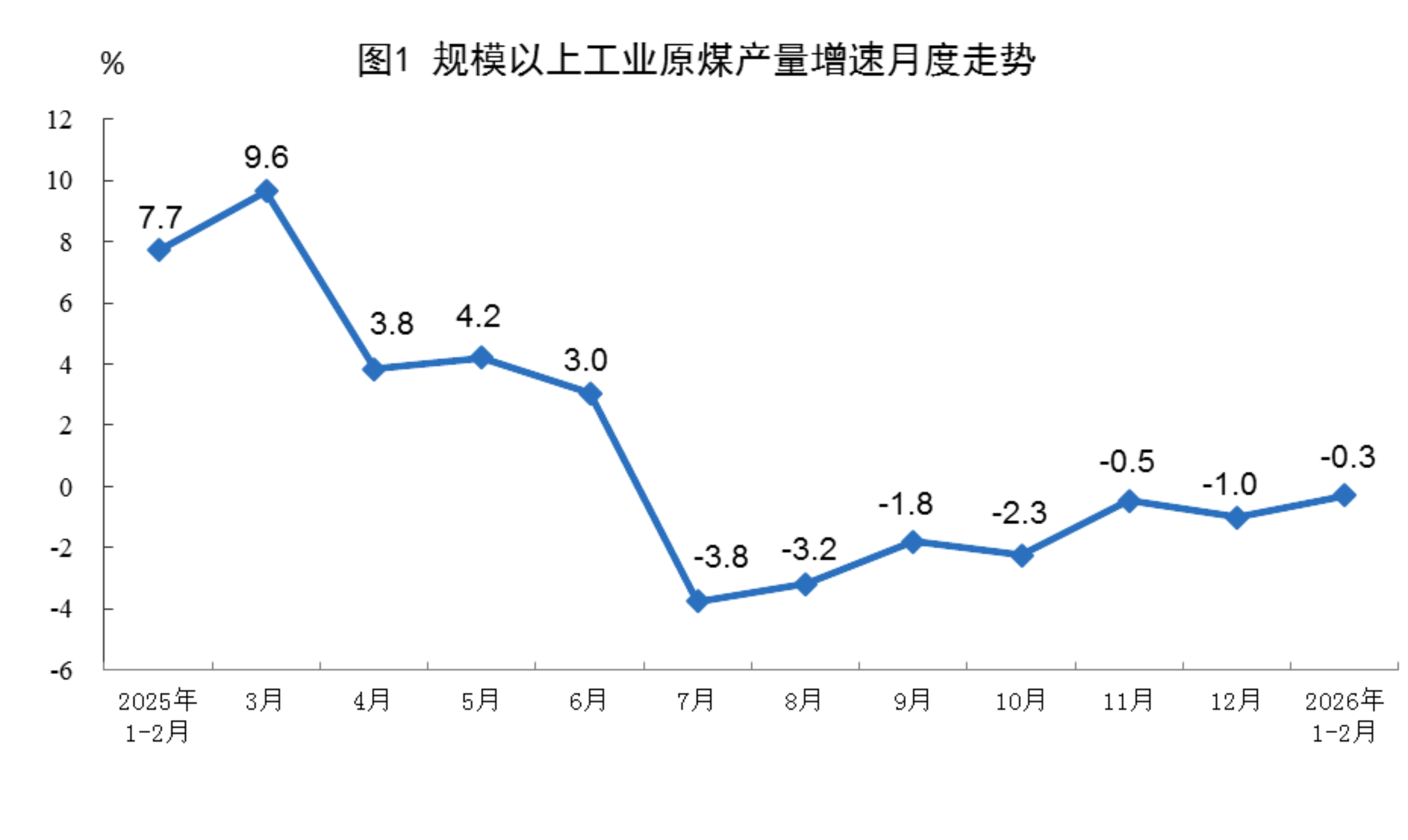
The decline in coal production narrowed. In January-February, the coal output of large-scale industrial enterprises was 760 million tons, a year-on-year decrease of 0.3%, with the decline narrowing by 0.7 percentage points compared to December 2025; the average daily output was 12.93 million tons.
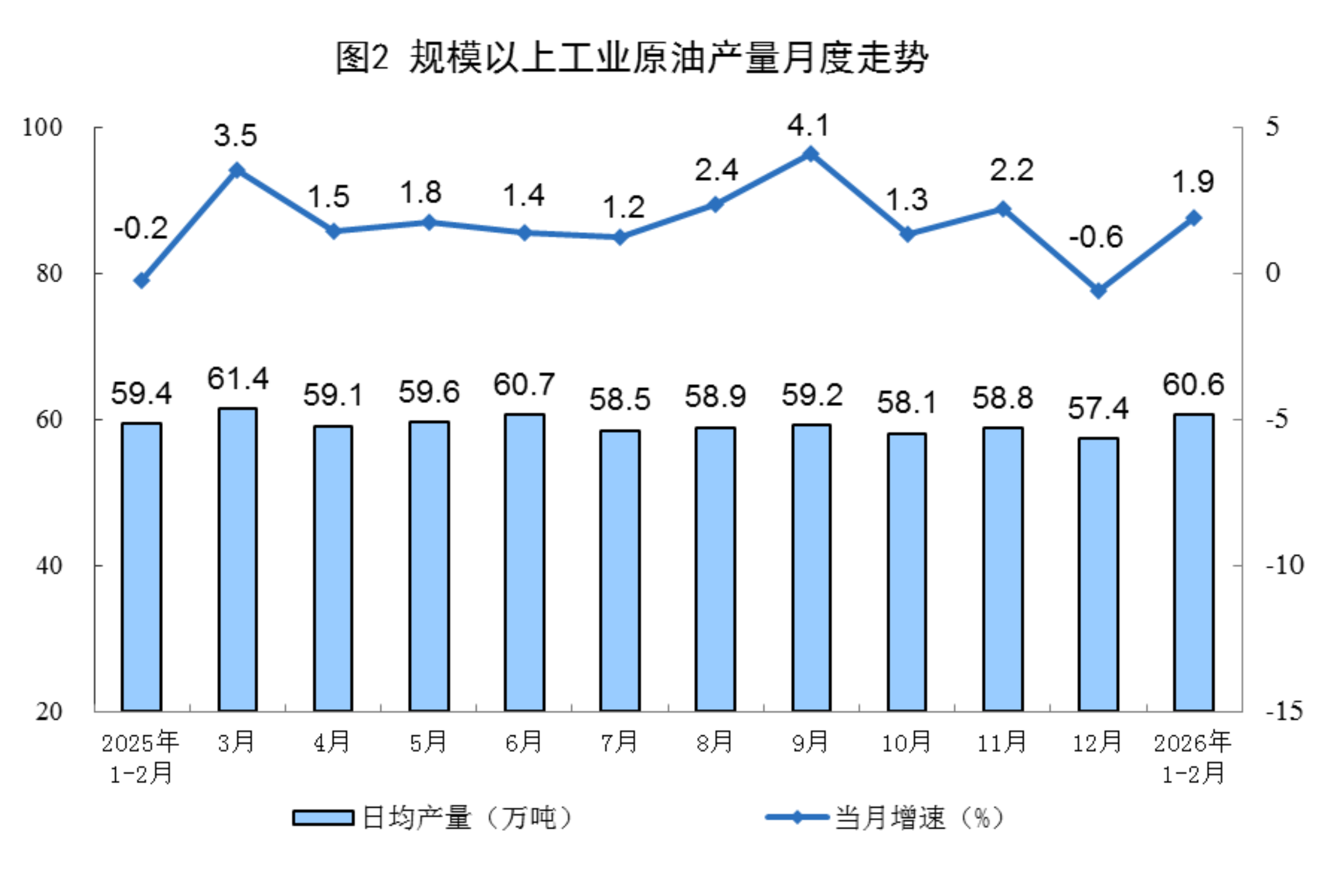
Crude oil production shifted from decline to increase. In January-February, the crude oil output of large-scale industrial enterprises was 35.73 million tons, a year-on-year increase of 1.9%, compared to a decrease of 0.6% in December 2025; the average daily output was 606,000 tons.
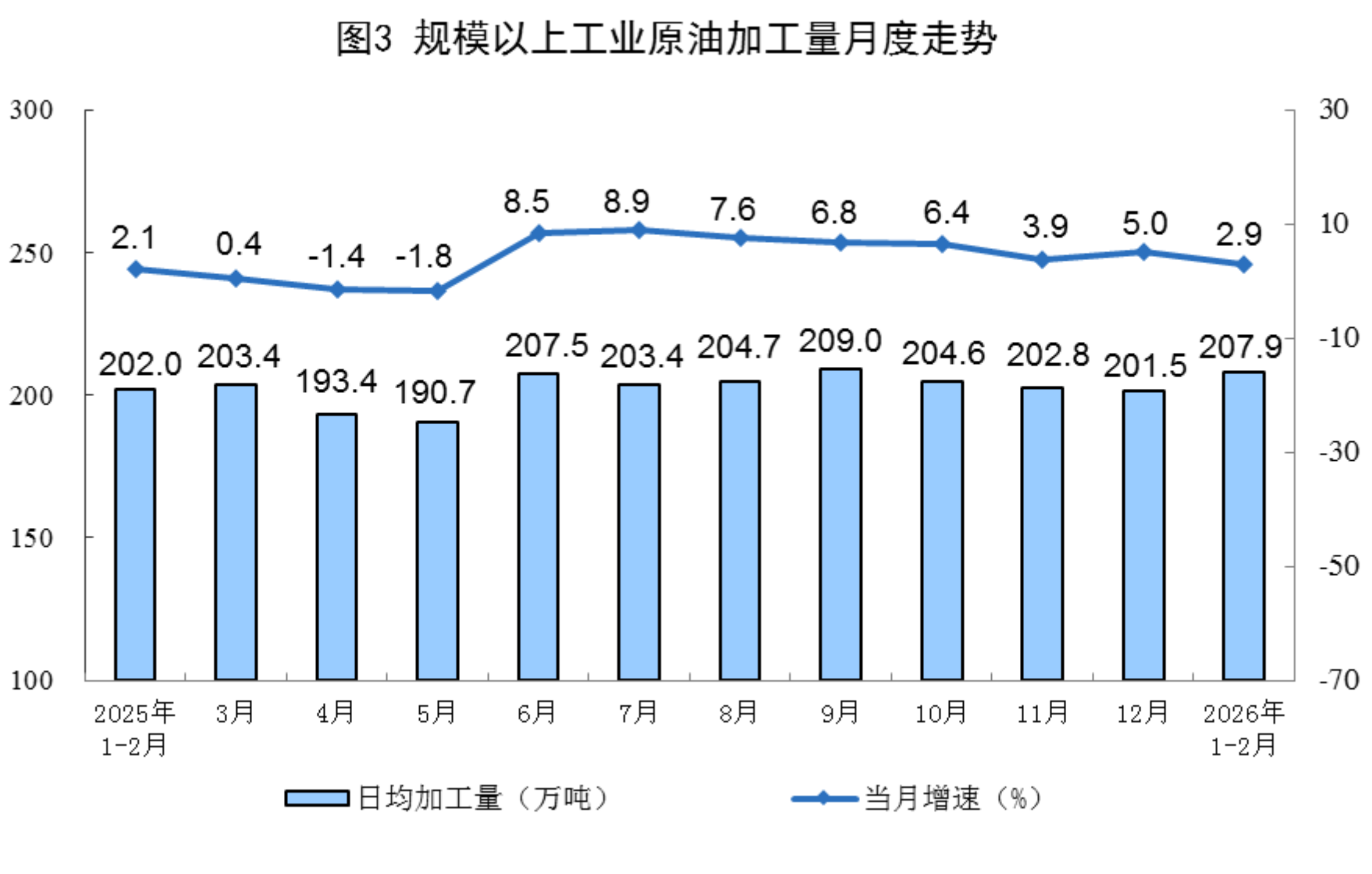
Crude oil processing maintained growth. In January-February, the crude oil processing volume of large-scale industrial enterprises was 122.63 million tons, a year-on-year increase of 2.9%; the average daily processing was 2.079 million tons.
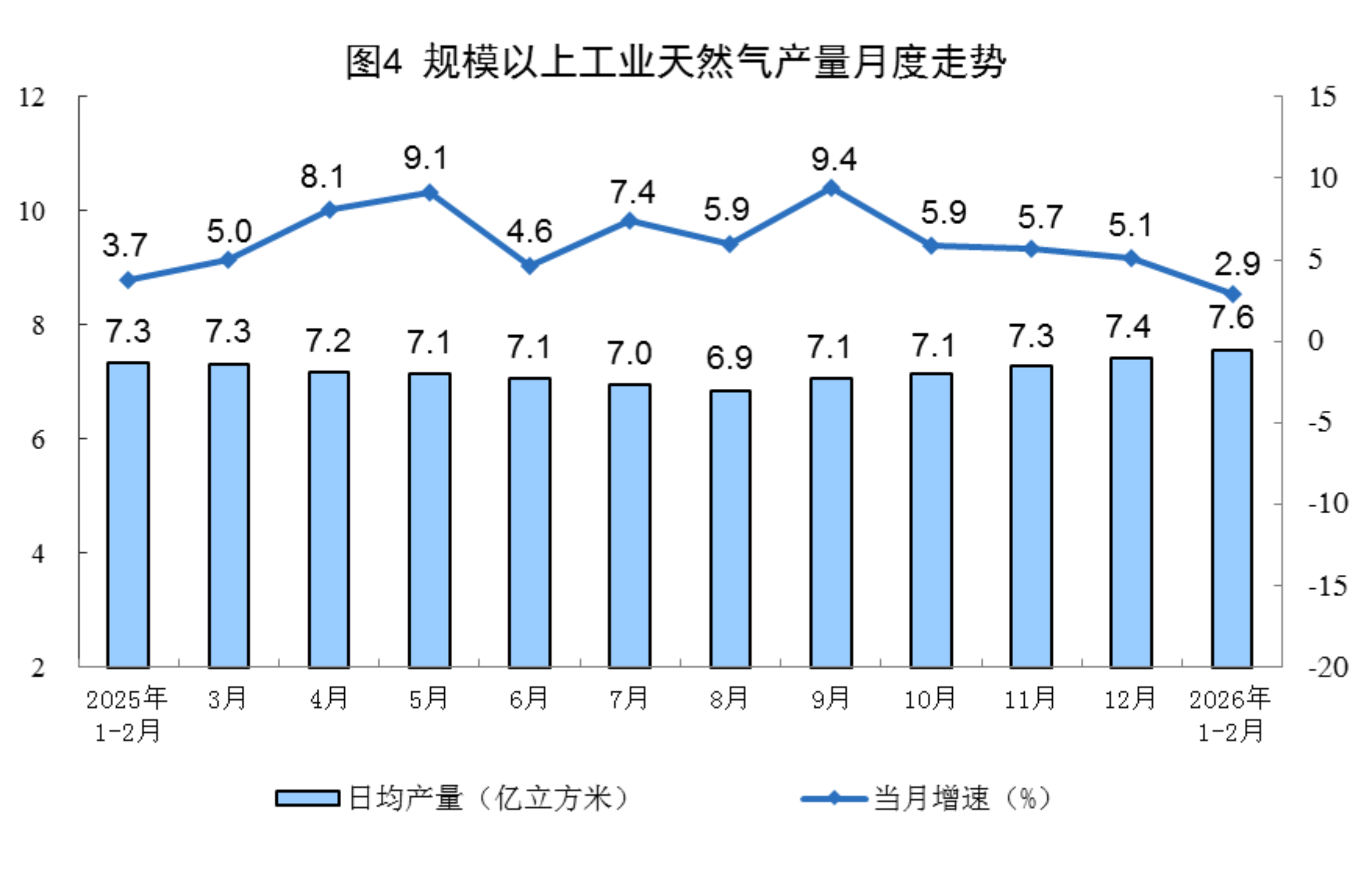
Natural gas production grew steadily. In January-February, the natural gas output of large-scale industrial enterprises was 44.6 billion cubic meters, a year-on-year increase of 2.9%; the average daily output was 760 million cubic meters.
II. Electricity production situation
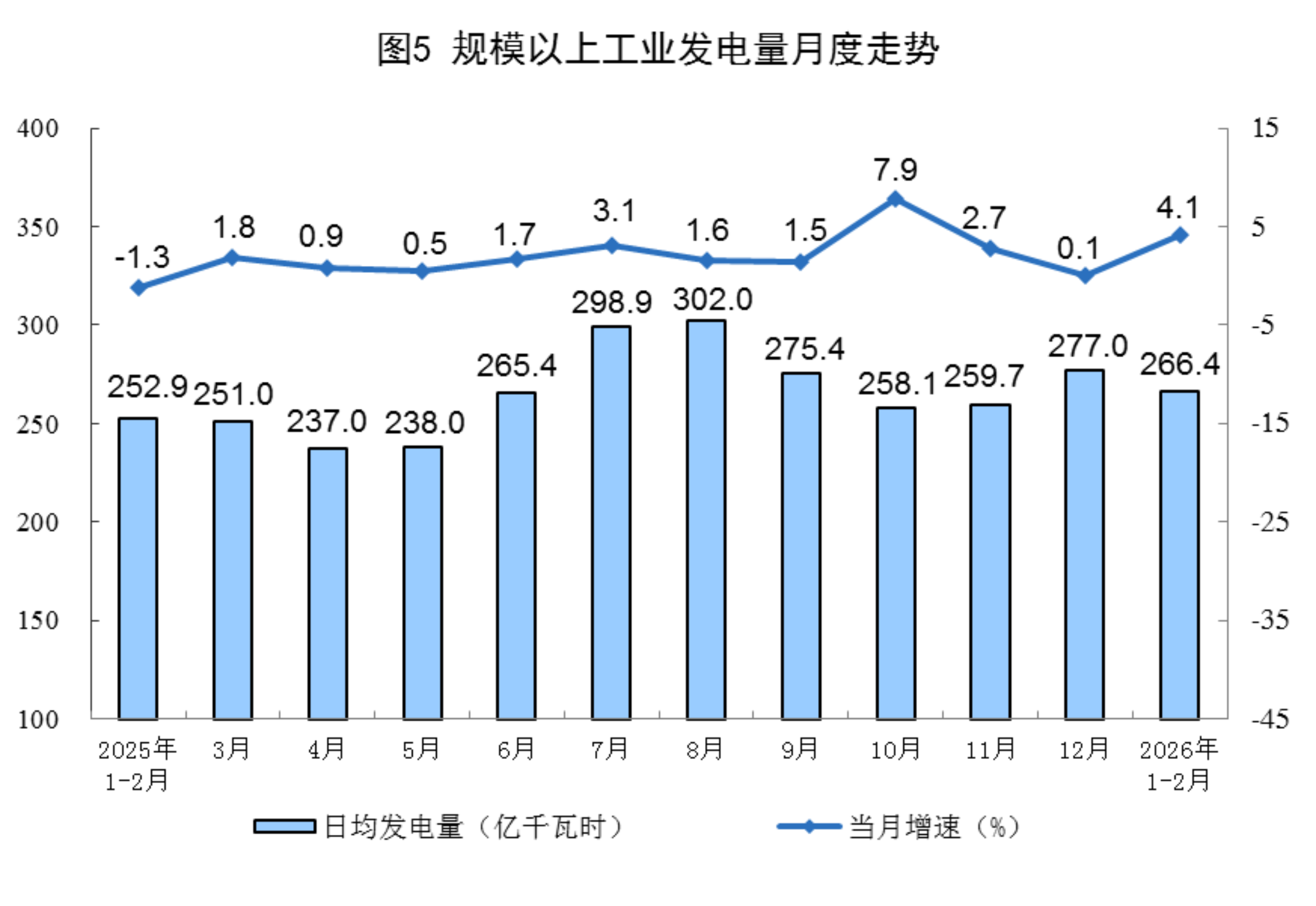
The growth rate of electricity production in large-scale industrial enterprises accelerated. In January-February, the power generation of large-scale industrial enterprises was 1,571.8 billion kilowatt-hours, a year-on-year increase of 4.1%, with the growth rate accelerating by 4.0 percentage points compared to December 2025; the average daily power generation was 26.64 billion kilowatt-hours.
By category, in January-February, thermal power in large-scale industrial enterprises shifted from decline to increase, hydropower growth accelerated, while the growth rates of nuclear power, wind power, and solar power slowed. Among them, thermal power in large-scale industrial enterprises increased by 3.3% year-on-year, compared to a decrease of 3.2% in December 2025; hydropower in large-scale industrial enterprises grew by 6.8%, with the growth rate accelerating by 2.7 percentage points; nuclear power in large-scale industrial enterprises grew by 0.8%, with the growth rate slowing by 2.3 percentage points; wind power in large-scale industrial enterprises grew by 5.3%, with the growth rate slowing by 3.6 percentage points; solar power in large-scale industrial enterprises grew by 9.9%, with the growth rate slowing by 8.3 percentage points.
-
Yangpu Maritime escorts the safe docking of the inaugural vessel on the "Nanning-Yangpu, Hainan" direct inland-sea shipping route.4749
-
The Youthful "Voices" Riding the Waves: A Tribute to the Beihai Maritime Safety Center's Integrated Media Studio3147
-
Chongming Maritime Launches Special Escort Operation for the 2026 East China Sea "Fishing Opening"3844
-
Zhangzhou united multiple departments to carry out a water and land traffic safety campaign in schools.4119
-
The Nanjing Riverside Cruise welcomes its 3,000th voyage.5021